How Should a Rash Guard Fit? BJJ Rash Guard Sizing, Long vs Short Sleeve
A rash guard should fit like a second skin, not a wetsuit. How tight is right, how to measure, a BJJ rash guard size chart, and long vs short sleeve.
The most common rash guard mistake is buying your t-shirt size. A rash guard is compression wear: it is supposed to feel tight when you put it on, and the one that feels "comfortable" in the mirror is the one that will ride up to your armpits the first time you get inverted. Here is how a rash guard should actually fit, how to measure, and how to pick between sizes.
The fit test, in one sentence
A rash guard fits when it is snug everywhere, moves with your skin, does not restrict your shoulders, and the hem stays below your waistband when you raise both arms. Snug means no loose fabric to grab; it does not mean you cannot breathe.
Go through it piece by piece:
- Chest and torso: flat against the body, no bagging, no wrinkles at the sides. If you can pinch a fold of fabric at the ribs, it is too big.
- Shoulders: the seam sits on the point of the shoulder, not down the arm. Raise your arms over your head: the shirt should follow without pulling the hem up more than an inch or two.
- Sleeves: on a long sleeve, the cuff reaches the wrist bone with the arm straight and does not slide past the elbow when you bend it. On a short sleeve, the cuff grips the arm above the elbow.
- Hem: two to three inches below your waistband when standing. That extra length is what keeps it tucked under shorts or a gi when you are upside down.
- Neck: close to the collarbone without choking. A gaping neckline is the first sign of a size too big.
Tight at first is normal. Polyester-spandex relaxes slightly after a few washes and conforms to you. A rash guard that is roomy on day one will be loose in a month.
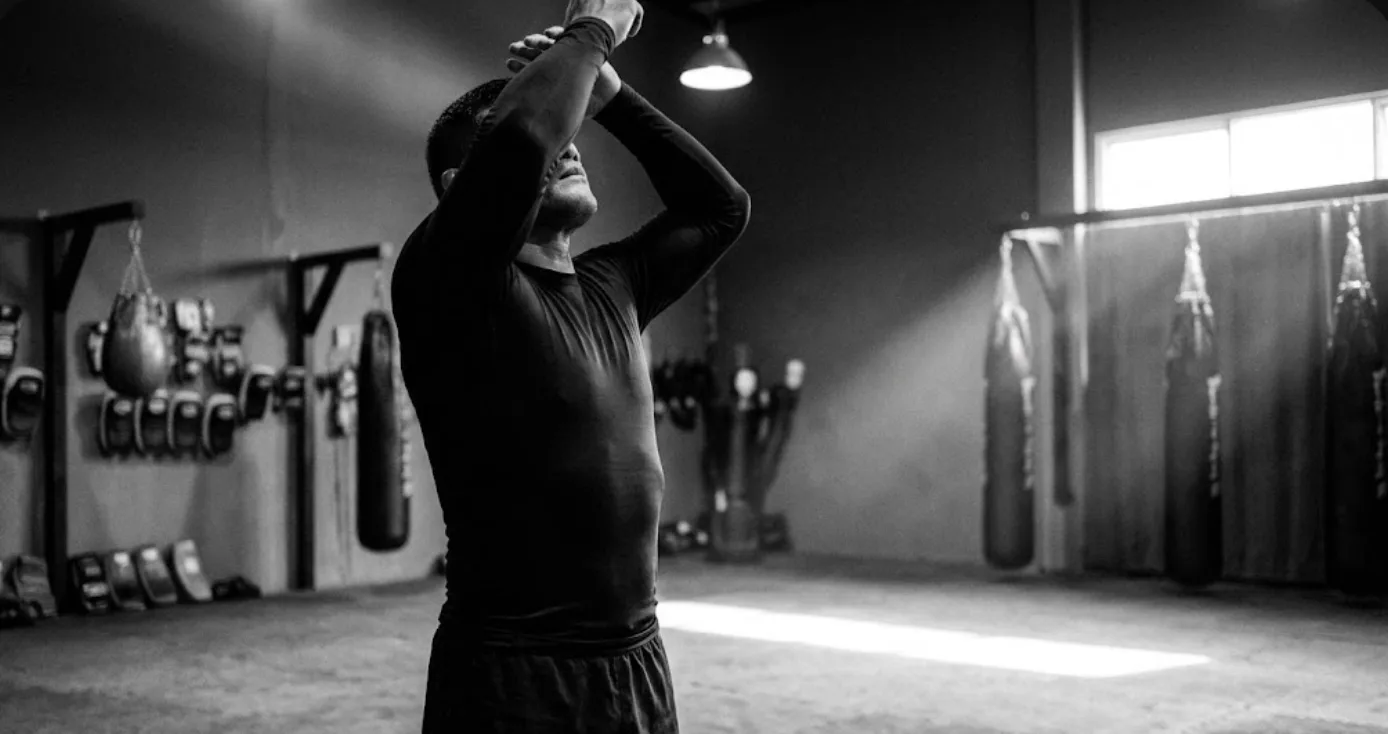
Arms up: the hem should stay at the waistband and the shoulders should move freely.
How to measure yourself
You need three numbers and a soft tape measure. Measure over bare skin or a thin shirt, tape snug but not compressing.
- Chest: around the fullest part, under the arms, tape level across the back. This is the number that decides your size.
- Waist: around the natural waist, where you bend sideways. It tells you whether the cut will bag at the stomach.
- Height: sleeve and hem length scale with it. Taller than average for your chest size, go for the longer cut or size up on long sleeves only.
If you do not have a tape, use a shirt that fits tight and measure it flat, then double the chest width.
BJJ rash guard size chart
Rash guard sizing is not standardized across brands, but most grappling brands cluster around the chart below. It is the one our rash guards and spats follow; always check the chart on the product page you are buying from, because Asian-cut brands can run a full size smaller.
| Size | Chest | Waist | Height | Typical weight |
|---|---|---|---|---|
| S | 34 to 36 in | 28 to 30 in | 5 ft 4 to 5 ft 7 | 120 to 145 lb |
| M | 37 to 39 in | 31 to 33 in | 5 ft 7 to 5 ft 10 | 145 to 170 lb |
| L | 40 to 42 in | 34 to 36 in | 5 ft 9 to 6 ft 0 | 170 to 195 lb |
| XL | 43 to 45 in | 37 to 39 in | 5 ft 11 to 6 ft 2 | 195 to 220 lb |
| XXL | 46 to 48 in | 40 to 42 in | 6 ft 0 to 6 ft 4 | 220 to 245 lb |
Chest wins. If your chest says L and your weight says M, you are an L. Weight is a guide for people who do not want to measure, nothing more.
Between two sizes
Go up on long sleeves, go down on short sleeves. Long sleeve rash guards have more fabric to pull on you and are worn under a gi, where a little room is fine; short sleeves are worn alone and rely on compression to stay put. If you are between sizes on both and you train no-gi mostly, size up: a rash guard that is slightly loose is annoying, one that is too tight across the shoulders restricts your frames and gets returned.
Women's rash guards
Women's cuts are shorter in the torso, narrower at the shoulder and shaped at the waist. Many women train in a men's small with no problem; the two things to check are the hem length, which should still clear the waistband with the arms up, and the sleeve, which should not bunch at the elbow. If a brand offers a women's chart, use it with your chest measurement rather than your usual clothing size.
Kids
Kids' rash guards are sized by age and height, and kids grow. Buy for the height they are now, not the one they will be at the end of the season: a rash guard that is too big offers grips and rides up, which is exactly what it is supposed to prevent.
Long sleeve vs short sleeve
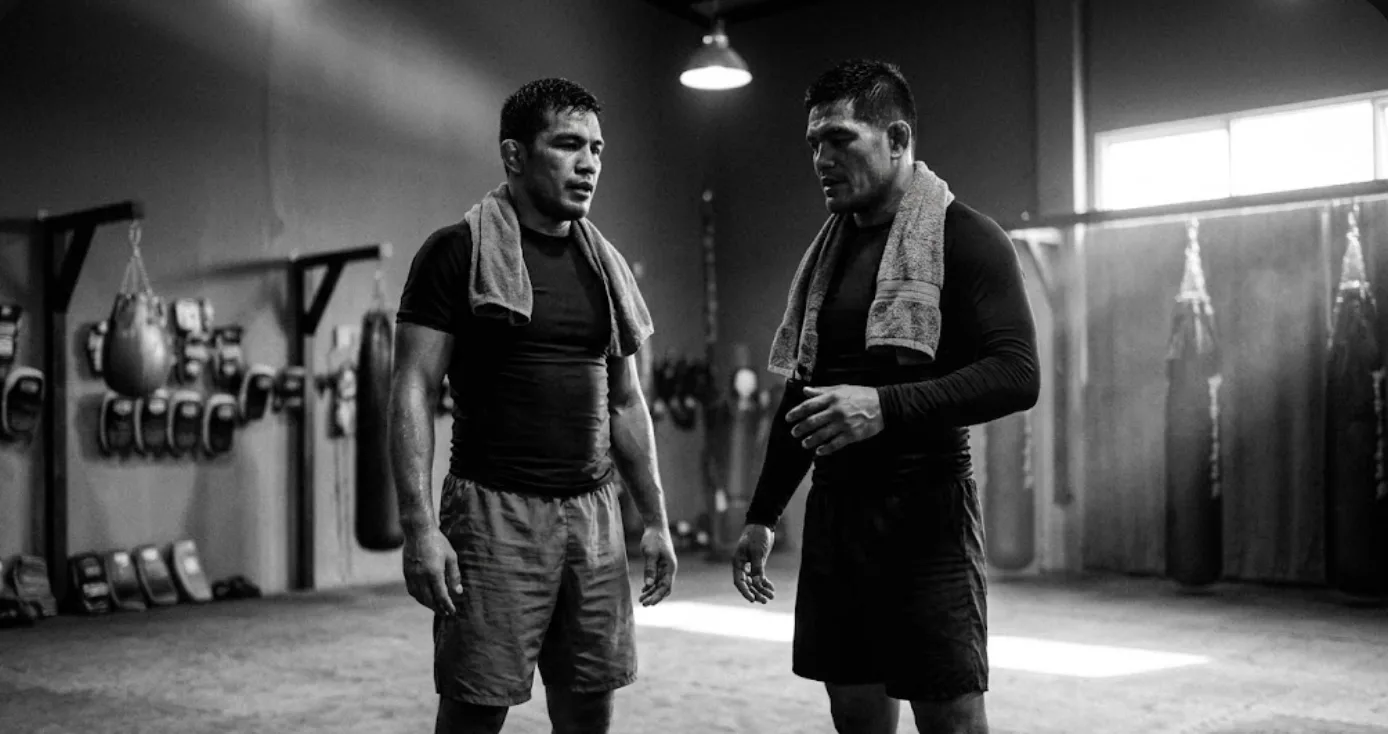
Short sleeve for hot rooms, long sleeve for mat burn and under the gi.
Neither is better. They solve different problems.
Short sleeve is cooler, dries faster, and is what most people wear for no-gi in a warm gym. The exposed forearm is the trade: more mat burn and more skin contact.
Long sleeve covers the forearms and elbows, which matters on old mats, in gyms that are heavy on wrestling, or if you simply get mat burn easily. It is also the standard choice under a gi, where the sleeve stops the jacket from rubbing. It is warmer, and in a hot room you will feel it.
The practical answer for someone who trains three or more times a week is one of each: short sleeve for summer and hot rooms, long sleeve for winter, under the gi and for competition.
Fabric and weight
The number to look for is grams per square meter. Around 180 GSM is the sweet spot for grappling: heavy enough to resist pilling and keep its compression after washing, light enough to dry overnight. Below 150 GSM you get surf rash guards that wear through at the elbows in a season. Above 220 GSM you are into thermal territory, fine for a cold garage gym, too warm for most.
The blend matters less than the weight: most grappling rash guards are 80 to 90 percent polyester with 10 to 20 percent spandex. More spandex means more stretch and a tighter fit, less means a shirt that holds its shape longer. Sublimated prints, where the design is dyed into the fabric, outlast screen prints, which crack at the elbows and ribs.
Make it fit for longer
Rash guards lose compression from heat, not from training. Wash cold, inside out, no fabric softener, and hang it to dry. The dryer and the iron are what turn a snug rash guard into a loose one in a few months. Washed this way, a 180 GSM rash guard keeps its fit for a year of training three times a week.
Not sure what else to wear to class? The no-gi dress code guide covers shorts, spats and the competition rules, and the first open mat guide covers everything that happens once you are dressed.
Frequently asked questions
Should a rash guard be tight or loose?
Tight. A rash guard is compression wear: it should be snug across the chest and shoulders with no loose fabric, while still letting you raise your arms freely. Loose rash guards ride up, give your partner grips and hold more sweat.
Do rash guards shrink?
Polyester-spandex barely shrinks in a cold wash, but it loses elasticity in a hot dryer and under an iron, which makes it feel looser, not tighter. Wash cold and hang dry and the fit stays the same for a year or more.
Should I size up or down for a rash guard?
Measure your chest and use the brand's chart. Between two sizes, size up on long sleeves and down on short sleeves. If you only own one and train mostly no-gi, size up: too tight across the shoulders is worse than slightly roomy.
How long should a rash guard be?
The hem should sit two to three inches below your waistband when you stand and still cover the waistband when you raise both arms. That length is what keeps it tucked into shorts or under a gi when you are inverted.
Can you wear a rash guard under a gi?
Yes, and most people do. A long sleeve rash guard under the gi stops the jacket from rubbing, keeps sweat off the gi and makes the uniform easier to wash. In competition, check the rulebook: some federations only allow rash guards under the gi in certain divisions.