Best Muay Thai Shorts: How to Choose Cut, Fabric and Size (and Why They're So Short)
How to choose Muay Thai shorts: why they are cut so short, satin vs polyester, a size chart for shorts that run small and what to wear to your first class.
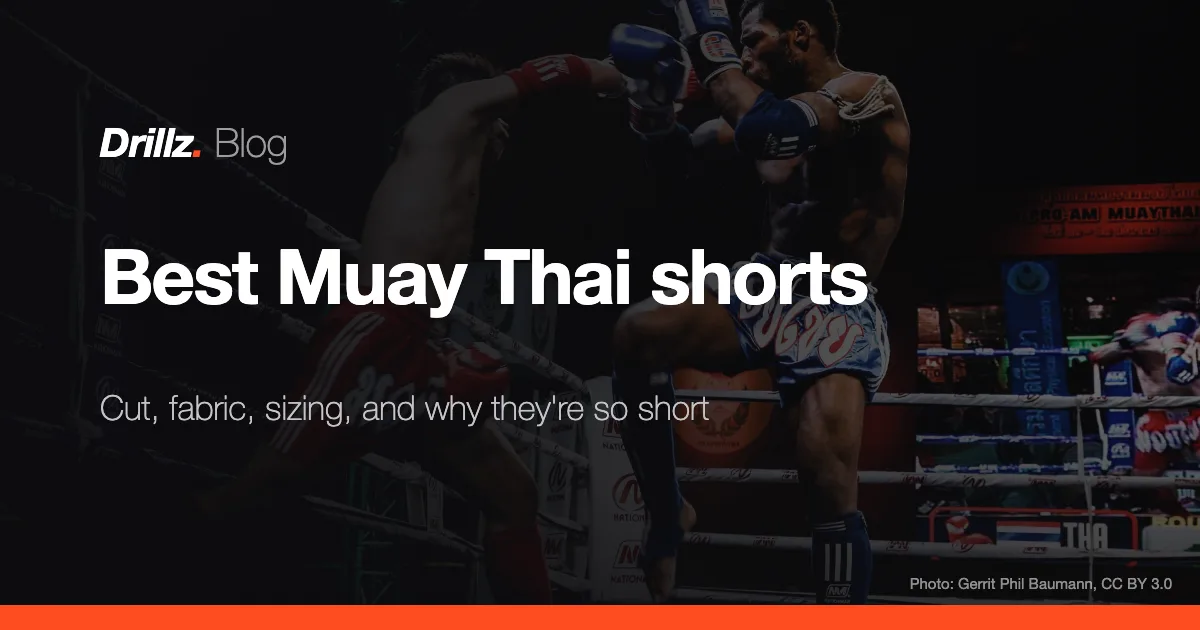
Muay Thai shorts are not just short shorts. The cut, the waistband and the fabric are all built around one thing: a knee or a kick that goes as high as your hip allows, hundreds of times a session, without the shorts getting in the way. Here is what separates a good pair from a cheap one, how to pick between the traditional satin and the modern technical cut, and how to size them, because almost every pair on the market runs small.
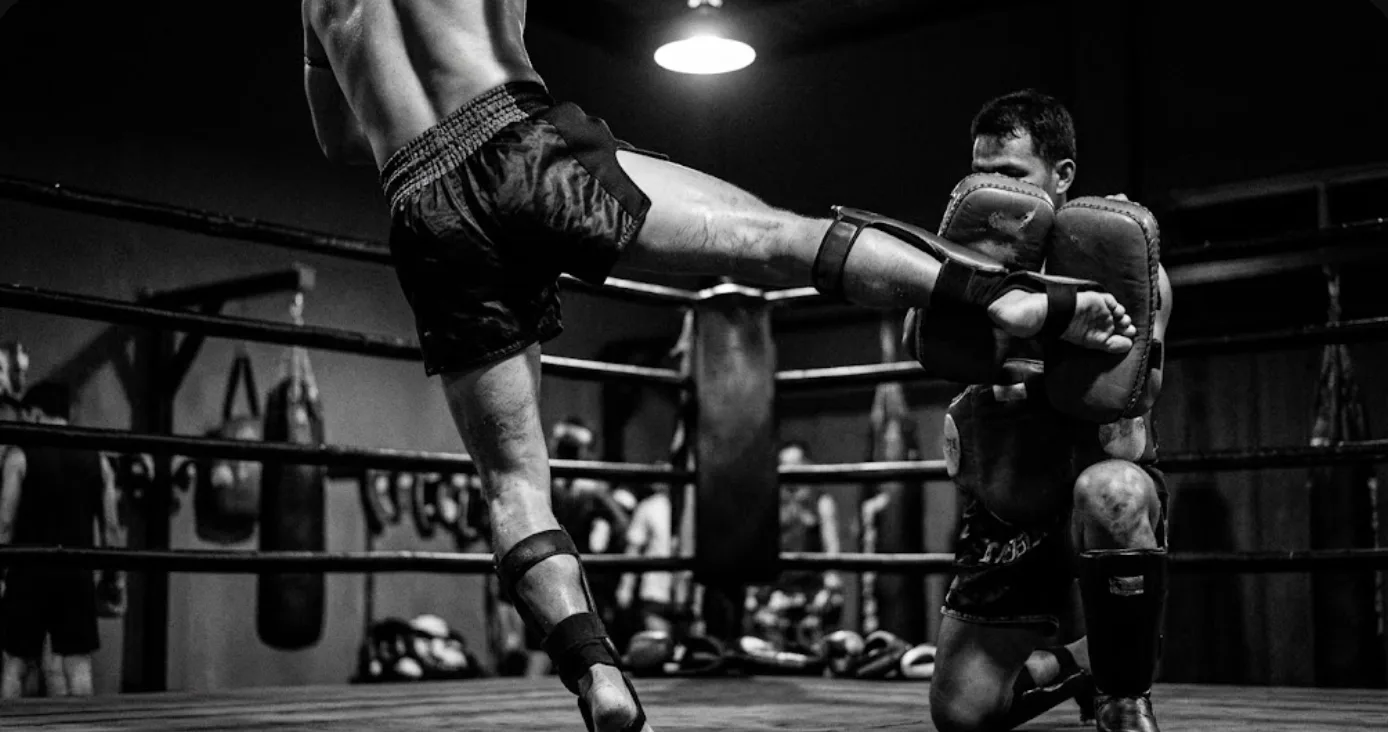
High side slits and a short leg: nothing gets in the way of the kick.
Why Muay Thai shorts are so short
The leg stops several inches above the knee for a mechanical reason: a long short restricts the hip at the top of a round kick and catches on the knee during a teep. Thai shorts also have high side slits, so when the leg goes up the fabric opens rather than pulls. The wide leg opening does the same job for knees in the clinch.
The high waist is the second half of the design. The shorts sit at the natural waist, above the hips, so the band stays put when you are being pushed and pulled in the clinch and so the short does not slide down under a belly pad. The result looks unusual the first time you wear it and makes complete sense the first time you throw a kick in a pair of basketball shorts.
Tradition does the rest. Thai fighters have worn this silhouette for a century, the big embroidered waistbands come from the stadium era, and most gyms outside Thailand still treat the Thai short as the uniform of the sport.
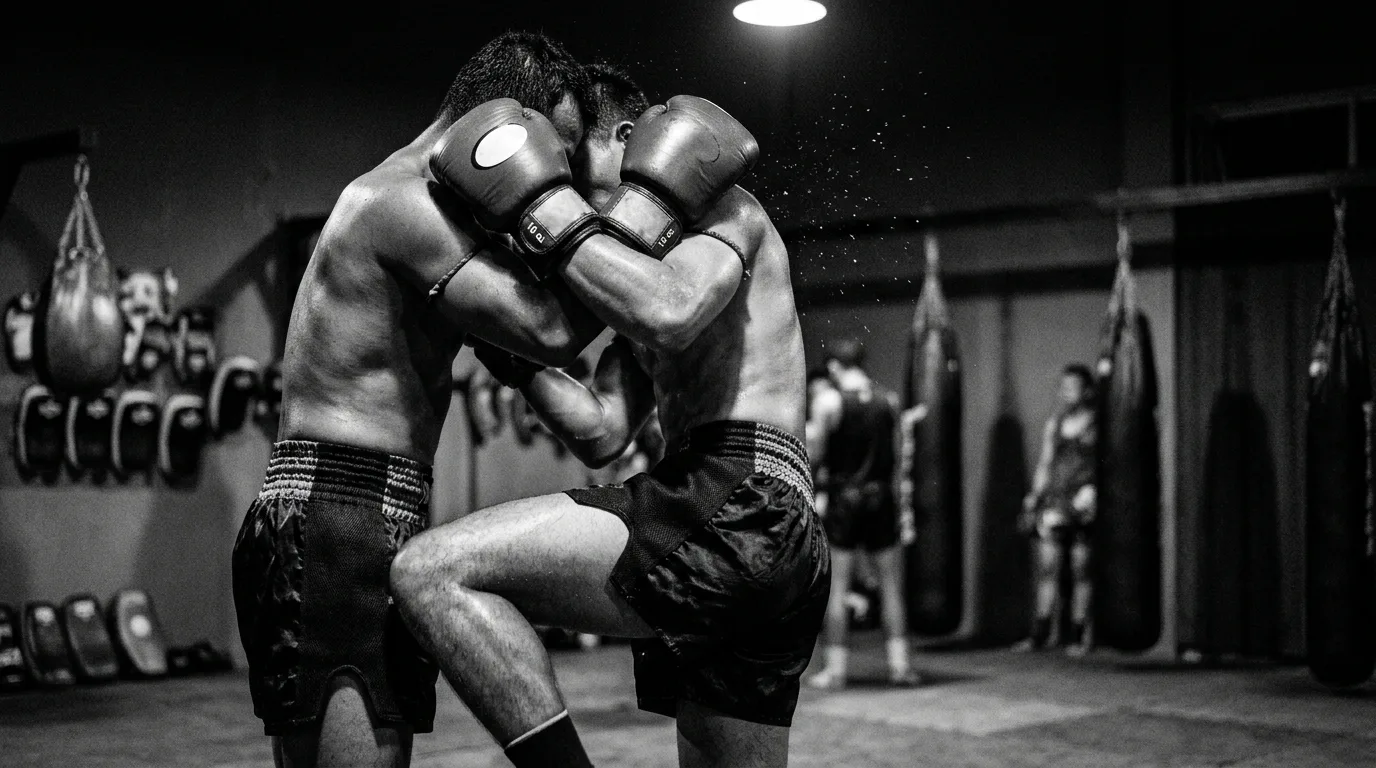
The high waist keeps the band in place through clinch work.
Traditional satin or modern technical cut
There are two families of Muay Thai shorts and the choice is mostly about comfort.
Traditional satin shorts are the stadium look: shiny nylon satin, a wide, stiff elastic waistband, heavy embroidery and contrast piping. They are what you see on fighters in Thailand and they are great for a fight. For training they have two drawbacks: the stiff band and embroidery get uncomfortable over a two-hour session, and satin holds sweat and gets heavy.
Technical shorts keep the Thai silhouette, the high waist, the short leg and the slits, but swap the materials: a thin four-way stretch polyester shell around 140 GSM that dries in under an hour, a soft elastic waistband with an inner drawstring instead of a stiff band, and designs that are sublimated, dyed into the fabric, instead of embroidered. They weigh about half as much soaked, and nothing scratches your partner in the clinch.
Retro prints are the middle ground that has taken over training rooms in the last few years: the loud old-school graphics of the satin era, dragons, eagles, tribal bands, printed on a modern lightweight shell. You get the look without the stiff band.
For training three or more times a week, technical or retro is the better buy. Satin is for fight night and for people who like the tradition enough to live with the band. Our Muay Thai shorts collection has a plain black technical cut for daily training.
What to check before you buy
- Fabric weight. Under 150 GSM for a technical short. Heavier means warmer and slower to dry, with no benefit.
- Waistband. Soft elastic with an inner drawstring is the most comfortable and stays up through clinch work. A stiff satin band is tradition, not performance.
- Slits and leg opening. The slits should run high, several inches up the hip, and the opening should be wide enough that a straight leg kick does not pull the band down.
- Print method. Sublimated prints never crack. Screen prints crack at the hip fold within a few months. Embroidery is durable but stiff and heavy.
- No pockets, no zippers, no metal. Non-negotiable for any class that includes clinch or MMA sparring, and a rule in most gyms.
- Stitching. Flat seams at the crotch and waistband. A raised seam at the crotch is the single most common complaint about cheap shorts.
Muay Thai shorts sizing: they run small
Almost every pair of Muay Thai shorts follows Thai sizing, which runs about one size smaller than US athletic brands. Reviews on the best-selling retro shorts are unanimous on this. Measure your waist at the natural waist, not where your jeans sit, and use the chart below as a starting point.
| Size | Waist | US equivalent |
|---|---|---|
| S | 26 to 28 in | US XS |
| M | 28 to 30 in | US S |
| L | 30 to 32 in | US M |
| XL | 32 to 34 in | US L |
| XXL | 34 to 36 in | US XL |
| XXXL | 36 to 38 in | US XXL |
Two rules on top of the chart:
- Between sizes, go up. The elastic waistband and the drawstring absorb a couple of inches of difference; a short that is too small cuts into the hips in the clinch.
- If you want them to sit lower, like MMA shorts on the hips rather than at the waist, take two sizes up and tighten the drawstring. This is common with people coming from MMA or BJJ.
Length does not change much between sizes: Thai shorts are meant to stop well above the knee at every size. If a pair reaches the knee, it is either an MMA short or a Western brand that has stretched the cut.
Muay Thai shorts vs MMA shorts
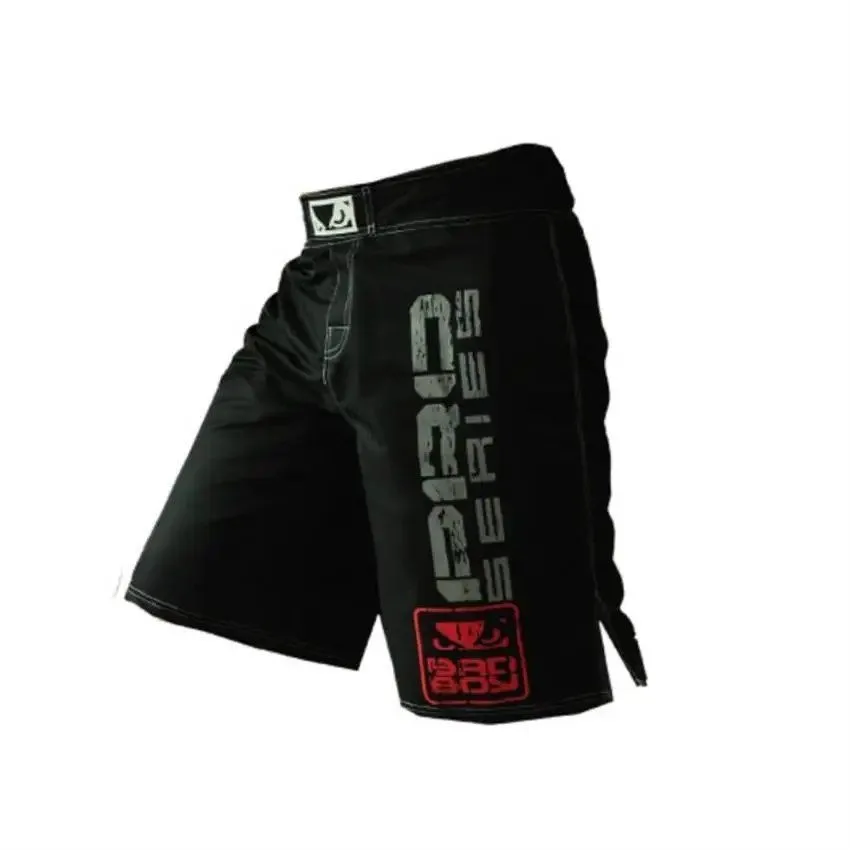
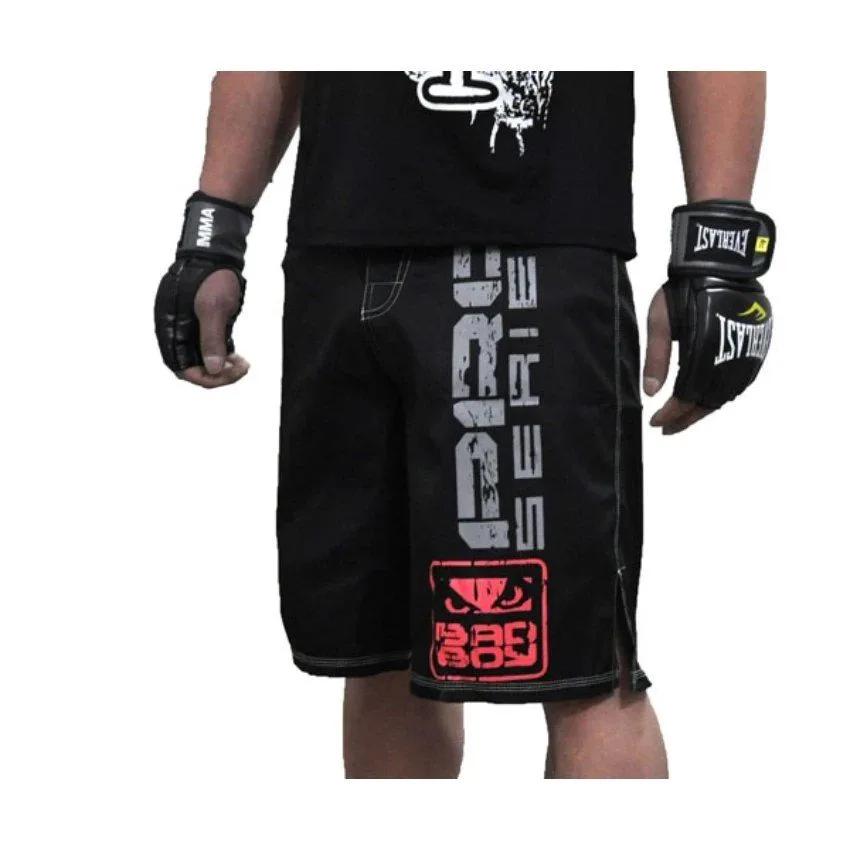
They are different tools. MMA shorts are longer, to the knee or just above, with a split side seam and a flat hook-and-loop closure; they are built for a mix of kicks, takedowns and ground work. Muay Thai shorts are shorter, higher at the waist, with an elastic band and open slits; they are built for kicks, knees and the clinch, standing. You can kick in MMA shorts and you can roll in Muay Thai shorts, but each is noticeably better at its own job. If your gym mixes striking and grappling, MMA fight shorts are the compromise; if it is a Muay Thai or kickboxing gym, buy Thai shorts.
What to wear to your first Muay Thai class
You do not need the full kit on day one. Most gyms lend gloves and pads for a trial, and the only thing you must bring is yourself, water and a towel. A reasonable first-day outfit is any athletic shorts without pockets or zippers and a t-shirt or rash guard; most gyms train barefoot, so skip the shoes and bring flip flops for off the mat.
Once you know you are staying, the kit builds in this order:
- Muay Thai shorts. First purchase, cheapest, and the one that changes how training feels.
- Hand wraps. 180 inch cotton wraps protect the wrist under any glove, including the gym's loaners.
- A mouthguard. Required for sparring at every gym, recommended for clinch work.
- Gloves. 14 to 16 oz for sparring, lighter for bags and pads. Buy after you have tried the gym's.
- Shin guards. The last piece, needed once you start sparring. Sized by height and calf, see our protective gear.
Looking for a gym? The Muay Thai gym listings cover rooms that welcome beginners, our guide to Muay Thai gyms in Los Angeles compares trial offers and sparring rules, and if you want a training partner at your level to go with, that is what Drillz is for.
Caring for your shorts
Cold wash inside out, no fabric softener, hang dry. Polyester shorts dry in about an hour on a hanger. The dryer and the iron are what kill them: heat dulls sublimated prints and loosens the waistband elastic, which is the part that holds a Thai short where it belongs. Satin shorts should be hand washed or washed in a mesh bag and never ironed.
Frequently asked questions
Why are Muay Thai shorts so short?
For mobility: a short leg and high side slits let the hip open fully on round kicks, knees and teeps without the fabric pulling. The high waist keeps the band in place in the clinch. The look comes from a century of Thai stadium tradition, but the cut is functional first.
What are the best Muay Thai shorts for training?
For regular training, a technical or retro-print short in a lightweight polyester shell with a soft elastic waistband and sublimated print. It dries fast, nothing scratches your partner and the design does not crack. Traditional satin shorts are better suited to fight night than to a two-hour class.
Do Muay Thai shorts run small?
Yes, almost always. Thai sizing runs about one size smaller than US athletic brands. Measure your natural waist, use the brand's chart, and go up a size if you are between two. Take two sizes up if you want the shorts to sit on the hips rather than at the waist.
Can you wear Muay Thai shorts for MMA or kickboxing?
Yes. As long as they have no pockets, zippers or metal, Muay Thai shorts are accepted in kickboxing and MMA classes, and plenty of MMA fighters train in them. For ground-heavy MMA classes, the longer MMA short with a split seam offers a little more coverage.
What do you wear under Muay Thai shorts?
Compression shorts or a jockstrap are the common choices. Regular underwear works, but loose boxers bunch under the high waistband. Avoid anything with a thick seam at the waist or hip, which will rub under the elastic band.